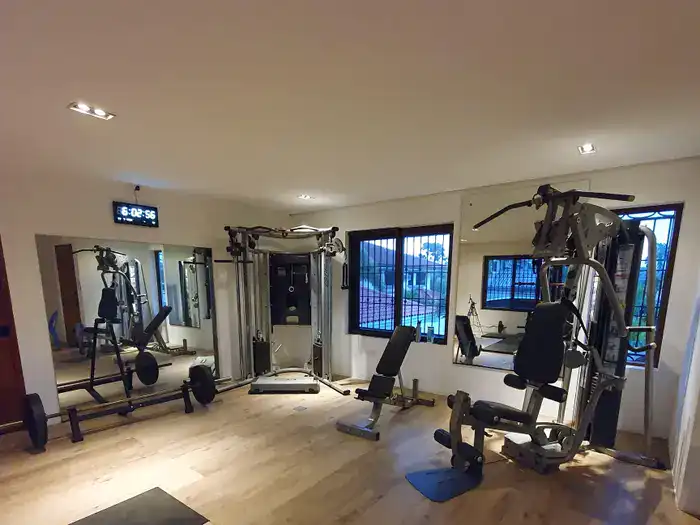
If you’re reading this, you’ve probably already spent a few mornings staring at a spare bedroom, a corner of the garage, or that awkward space under the stairs, trying to convince yourself that a yoga mat and a pair of dumbbells are enough. They aren’t. At least, not for long. The real problem with home gyms in Los Angeles isn’t motivation—it’s space and layout. Sherman Oaks properties, in particular, come with their own quirks: older foundations, weird floor plans, and HOA rules that can kill a project before you even pick up a hammer.
We’ve been through this process with dozens of homeowners, and the ones who end up actually using their home gyms are the ones who treated the design like an addition, not just a room. That means thinking about structure, ventilation, noise, and how the space connects to the rest of your life. If you’re in Sherman Oaks, you’re also dealing with seismic retrofitting requirements, temperature swings that make garage gyms miserable in July, and the fact that your neighbors are close enough to hear your deadlifts.
Key Takeaways
- A home gym addition in Sherman Oaks requires structural planning for seismic safety and load distribution.
- Flooring, ventilation, and soundproofing are non-negotiable for long-term use.
- Garage conversions often fail because they ignore moisture and temperature control.
- Professional design can save you from costly mistakes like undersized electrical circuits or poor ceiling height.
Table of Contents
Why Most Home Gym Additions Fail Within Six Months
It sounds dramatic, but we’ve seen it happen. A homeowner spends $15,000 on equipment, converts a den, and within a few months the room becomes an expensive storage closet. The equipment is too loud for the family, the rubber mats smell like a tire fire in the summer, and the lack of natural light makes it feel like a dungeon. The failure isn’t about willpower—it’s about bad design.
The biggest mistake we see in Sherman Oaks is treating the gym as an afterthought. People look at square footage and forget to account for ceiling height, door width, and floor load capacity. A standard 8-foot ceiling feels claustrophobic once you install a pull-up bar or try to do overhead presses. And if you’re planning on Olympic lifts, you need at least 10 feet of clearance and a floor that can handle repeated drops.
Another common issue is electrical. You might think a few outlets are enough, but treadmills, fans, sound systems, and lighting draw more power than a typical bedroom circuit can handle. We’ve had to rewire entire rooms because someone plugged in a commercial-grade treadmill and tripped the breaker every 20 minutes.
Assessing Your Sherman Oaks Home’s Potential
Not every house is a good candidate for a home gym addition. Sherman Oaks has a mix of mid-century ranches, newer townhomes, and custom builds, each with different constraints. Before you start shopping for equipment, take a hard look at three things: available square footage, access to plumbing, and structural integrity.
Structural Considerations for Los Angeles Homes
Living in Los Angeles means living with earthquakes. Any addition or conversion needs to account for shear walls, foundation bolts, and proper load paths. If you’re converting a garage, you need to verify that the slab is thick enough to handle heavy equipment. Most garage slabs are only 4 inches thick, which is fine for a car but not for a squat rack with 400 pounds on it. You’ll likely need to pour a reinforced pad or use rubber stall mats to distribute the weight.
We’ve also seen homes in Sherman Oaks where the original framing is from the 1950s or 60s. Those homes weren’t designed for the concentrated loads that gym equipment creates. A structural engineer should evaluate the floor joists and determine if you need additional support, like a beam or column in the basement or crawl space.
Climate and Ventilation Realities
The San Fernando Valley gets hot. Really hot. A garage gym in Sherman Oaks in July can easily hit 100 degrees by 10 AM. Without proper ventilation, you’re not going to work out—you’re going to pass out. We recommend installing a mini-split HVAC system or at least a high-CFM exhaust fan with a dedicated intake. Windows help, but only if they’re operable and positioned for cross-ventilation.
Humidity is another factor. If your gym is below grade or attached to a bathroom, moisture can ruin your equipment and create mold issues. A dehumidifier is a cheap insurance policy, but it needs to be sized correctly for the room volume.
Flooring Is Not Optional
We’ve seen people try to save money by using puzzle mats from a big-box store. Those are fine for light yoga or stretching, but they won’t hold up to dropped weights or heavy cardio machines. For a real home gym, you need at least 3/8-inch rubber flooring, preferably rolled sheets rather than interlocking tiles. Tiles shift over time and create tripping hazards.
If you’re installing a home gym addition on a second story, you also need to think about sound transmission. Drop a barbell on a second-floor gym, and your downstairs neighbors (or family) will hear it like a hammer hitting the ceiling. We’ve used floating floors with acoustic underlayment and rubber mats to dampen the impact, but it’s never perfect. If you’re planning heavy lifts, consider putting the gym on a concrete slab.
For a quick comparison, here’s what we typically recommend based on use case:
| Activity Type | Flooring Recommendation | Approximate Cost per Sq Ft | Notes |
|---|---|---|---|
| Yoga, stretching, light bodyweight | 1/4″ cork or foam tiles | $2–$4 | Comfortable but not durable for heavy equipment |
| Cardio machines (treadmill, bike) | 3/8″ rubber rolls | $5–$8 | Reduces vibration and protects subfloor |
| Free weights, Olympic lifting | 1/2″ to 3/4″ rubber stall mats | $8–$12 | Must be installed over a reinforced slab |
| Mixed use (yoga + weights) | 3/8″ rubber over plywood subfloor | $6–$10 | Balances comfort and durability |
Soundproofing and Neighbor Relations
If you live in a Sherman Oaks townhouse or a home with shared walls, soundproofing isn’t a luxury—it’s a necessity. We’ve mediated disputes between homeowners and neighbors over gym noise more times than we can count. The solution isn’t just insulation; it’s decoupling.
The most effective approach is to build a room within a room. That means using resilient channels, double-layer drywall with Green Glue, and acoustic caulk around every seam. It’s expensive, but it works. A cheaper alternative is to install heavy curtains and rubber mats, but those only reduce sound by about 10–15 decibels. For reference, a dropped barbell can hit 90 decibels, which is loud enough to travel through standard walls.
We also recommend scheduling heavy lifting during reasonable hours. It’s common sense, but you’d be surprised how many people set up their gym and start dropping weights at 6 AM. Your neighbors will not appreciate it, and in some HOAs, you can face fines.
Electrical and Lighting Considerations
Most home gyms need dedicated circuits. A treadmill alone can draw 15 amps, and if you’re running a fan, a TV, and a sound system on the same circuit, you’re asking for trouble. We usually run two 20-amp circuits for a medium-sized gym: one for equipment and one for lighting and accessories.
Lighting is often overlooked. Overhead fluorescent lights create harsh shadows and make the room feel like a warehouse. We prefer dimmable LED panels or track lighting that can be adjusted for different activities. If you’re doing yoga or stretching, warm light is better. For heavy lifting, you want bright, even illumination to avoid shadows that can mess with your depth perception.
When to Hire a Professional Instead of DIY
We’re all for saving money, but some things are worth paying for. If your project involves any of the following, you should hire a licensed contractor:
- Moving or adding walls
- Upgrading electrical panels or running new circuits
- Pouring concrete or modifying the foundation
- Installing HVAC or plumbing for a bathroom or wash area
- Any work that requires a permit from the City of Los Angeles
Permits matter in Sherman Oaks. The city has strict building codes, especially for additions and conversions. If you skip the permit and something goes wrong—a fire, a collapse, an injury—your insurance won’t cover it. We’ve seen homeowners try to save $2,000 on a permit and end up with $20,000 in fines and a stop-work order.
On the other hand, if you’re just painting walls, laying rubber flooring, and assembling equipment, go ahead and DIY. That’s the easy part.
Alternatives to a Full Addition
Not everyone has the space or budget for a dedicated room. If that’s your situation, consider these alternatives before you start knocking down walls:
- Garage conversion: Cost-effective but requires climate control and slab reinforcement.
- Shed or backyard studio: Works if you have the yard space and can run power. Check setback requirements in Sherman Oaks.
- Basement gym: Rare in Los Angeles, but some homes have crawl spaces that can be excavated.
- Multi-purpose room: Use a dining room or den with foldable equipment. It’s not ideal, but it’s affordable.
Each option has trade-offs. A garage conversion is cheaper than a full addition, but you lose parking and storage. A backyard studio gives you separation from the house, but you’ll need to run utilities. We always tell clients to think about how the space will be used in five years, not just tomorrow.
Final Thoughts
Building a home gym in Sherman Oaks isn’t just about buying a rack and some plates. It’s about creating a space that works with your home’s structure, your family’s schedule, and the local climate. We’ve seen too many people spend thousands on equipment only to realize the room is unusable for half the year or too loud for the neighborhood.
If you’re serious about this, start with a structural assessment and a realistic budget. Factor in permits, HVAC, and soundproofing. And if you’re not sure about the load-bearing capacity of your floor or the electrical requirements of your equipment, call a professional. It’s cheaper than fixing a disaster.
At Royal Home Remodeling, located in Los Angeles, CA, we’ve helped homeowners in Sherman Oaks design and build home gyms that actually get used. Whether it’s a garage conversion or a full addition, we focus on the details that make the difference between a room you walk past and a room you use every day.
Related Articles
People Also Ask
Designing a home gym layout begins with defining your workout goals and available space. Start by measuring the room and mapping out clear zones for cardio, strength, and stretching. Prioritize ceiling height for equipment like treadmills or pull-up bars, and ensure adequate clearance around each machine for safe movement. Consider flooring: rubber mats are ideal for high-impact areas, while foam tiles work well for yoga. Proper ventilation and lighting are crucial, so add fans and bright, adjustable lights. For wall space, install mirrors to check your form and storage racks for dumbbells and bands to keep the floor clutter-free. Royal Home Remodeling recommends planning electrical outlets for smart equipment and ensuring your layout allows for a natural flow between exercises. Finally, leave a dedicated recovery corner with a mat and foam roller to complete a functional, motivating space.
Yes, a home gym can add value to a house, but the return on investment depends heavily on execution. A well-designed, dedicated fitness room with proper flooring, ventilation, mirrors, and adequate electrical outlets is highly attractive to buyers, often recouping a significant portion of the cost. However, converting a bedroom or garage into a highly specialized gym can deter families or those who prefer flexible spaces. The key is to build a versatile, clean, and light-filled space that can easily convert back to a standard room. At Royal Home Remodeling, we advise clients in Van Nuys to focus on permanent, high-quality fixtures rather than bulky equipment to maximize both appeal and appraisal value.
Yes, 300 square feet is generally enough for a highly functional home gym. This space allows you to comfortably arrange a multi-station setup, including a squat rack, a bench, a treadmill or elliptical, and a dedicated area for free weights or kettlebells. The key is to plan your layout strategically to maintain clear, safe pathways. For most users, this footprint supports both strength training and cardio without feeling cramped. If you are working with a tighter footprint, consider wall-mounted storage to maximize floor space. At Royal Home Remodeling, we often advise clients that a dedicated 300-square-foot room offers the ideal balance of versatility and comfort for a serious workout environment.
Building a home gym is a highly scalable investment, with costs ranging from a few hundred dollars for a basic setup to over $10,000 for a premium, fully-equipped space. A functional starter package, including adjustable dumbbells, a bench, and resistance bands, typically costs between $500 and $1,500. For serious lifters, a power rack, Olympic barbell, and weight plates will push the budget to $2,000–$5,000. High-end additions like specialized cardio machines, rubber flooring, and sound systems can exceed that figure. Your final budget depends heavily on your fitness goals and available square footage. If you are converting a garage or spare room, remember to factor in costs for proper ventilation, lighting, and flooring protection. For professional guidance on structural modifications or electrical upgrades for your new space, Royal Home Remodeling can provide a tailored consultation to ensure your project is safe and functional.
Designing a home gym floor plan starts with measuring your available space and ceiling height. For a functional setup, you generally need at least a 10 by 10 foot area for basic equipment, but a 12 by 14 foot rectangle is ideal for a treadmill, a weight bench, and free weights. Always leave a 3-foot clearance path around each machine for safe movement and access. Consider traffic flow, placing cardio machines near a window or TV, and anchoring heavy racks away from doors. For flooring, use 3/8-inch rubber mats to protect your subfloor and reduce noise. If you are converting a garage or spare room, verify the joists can handle the concentrated weight of dumbbells and racks. For a custom layout tailored to your specific square footage, Royal Home Remodeling can help you plan the structural and electrical needs, ensuring your gym is both safe and efficient.
Designing a small home gym floor plan requires careful measurement to ensure both safety and functionality. For a standard 10x10 foot room, prioritize a clear central floor area of at least 6x6 feet for bodyweight exercises or stretching. Place larger equipment like a treadmill or elliptical along the 10-foot wall, allowing a 3-foot clearance behind the machine for safe dismount. Allocate a 4x6 foot zone for a bench and free weights, ensuring you have at least 2 feet of space around the bench for loading bars. If you include a wall-mounted TV, position it opposite the cardio equipment. Always factor in a dedicated 2-foot-wide pathway to the door. For precise layouts tailored to your specific space and equipment, Royal Home Remodeling can help you optimize the structural flow and electrical needs of your conversion.
Designing a home gym requires balancing function, safety, and available square footage. Start by defining your workout goals and measuring the space, ensuring at least seven feet of ceiling height for overhead movements. Prioritize durable, shock-absorbent flooring like rubber mats to protect your joints and subfloor. Incorporate versatile equipment such as adjustable dumbbells, a pull-up bar, and resistance bands to maximize utility without clutter. Good ventilation and lighting are crucial; consider mirrors to check form and bright, cool-toned LEDs for energy. For storage, use wall-mounted racks and pegboards to keep the area organized. If you are weighing the financial return of this renovation, our internal article titled 'How Much Value Does a Home Gym Add' is an excellent resource. For a professional layout that fits your home, Royal Home Remodeling can help you integrate these ideas seamlessly into your Van Nuys property.
Creating a home gym on a budget is about prioritizing function over flash. Start with versatile, low-cost equipment like resistance bands, a set of adjustable dumbbells, and a stability ball. These items cover strength, flexibility, and core work without taking up much space. For cardio, consider a jump rope or a used treadmill from a local marketplace. Instead of buying new mirrors, use a yoga mat and stream free workout videos on your TV. To maximize your space, install wall-mounted shelves for storage and use a simple fan for ventilation. If you plan a layout or need help converting a garage, Royal Home Remodeling can advise on durable flooring and lighting, ensuring your budget-friendly gym is safe and built to last.
Creating a budget-friendly basement gym is about prioritizing function over flash. Start by laying down durable rubber floor tiles or interlocking foam mats to protect your subfloor and equipment. Instead of buying a full rack, invest in a set of adjustable dumbbells and a sturdy, foldable weight bench, which saves both space and money. For cardio, consider a used treadmill or a jump rope, which offers a high-intensity workout for under $20. Wall-mounted mirrors from a big-box store can make the space feel larger and help you check your form. Proper lighting and a simple fan are also crucial for comfort. Finally, use a DIY pull-up bar and resistance bands to round out your routine. For a seamless and safe setup, Royal Home Remodeling can help you with the necessary electrical and flooring upgrades to ensure your new gym is both functional and durable.