Table of Contents
Structural Water Damage and Mold Vulnerabilities in Reseda and Valley Homes
San Fernando Valley homes built between 1950 and 1970 suffer elevated water damage risks due to aging galvanized plumbing, unreinforced slab foundations, and seasonal soil shift. Undetected pinhole leaks behind bathroom tile or kitchen cabinetry quietly saturate wall cavities, triggering rapid microbial growth within 24 to 48 hours long before moisture becomes visibly apparent on drywall surfaces.
Most residential construction across Reseda, Sherman Oaks, and Encino features post-war slab foundations paired with original copper or galvanized iron piping embedded directly within concrete. Over decades, subterranean soil movement and aggressive municipal water chemistry create micro-fractures in these buried lines. When water escapes beneath a slab, hydrostatic pressure forces moisture upward through porous concrete, saturating subflooring, carpet padding, and bottom wall plates.
During a complex project in a 1960s ranch home in nearby Encino, we resolved a subtle subterranean leak that had saturated wall framing and structural baseplates across a bathroom and adjacent hallway. The homeowner reported a damp odor, yet surface testing by prior contractors showed no liquid accumulation. We brought in specialized acoustic detection gear alongside thermal imaging equipment, pinpointing a failing supply line beneath four inches of concrete. We executed a localized slab breakout, installed a overhead PEX manifold bypass, deployed 2,000 CFM HEPA air scrubbers under negative pressure containment, and dried the pine wall studs to below 12 percent moisture content before carrying out a full tile and vanity reconstruction.
Failure to identify structural moisture pathways early inevitably accelerates subfloor decay and drywall disintegration. We frequently discover that water entering one room travels along structural joists, emerging ten to fifteen feet away in an adjacent kitchen or closet. The primary drivers behind residential water damage in our local service areas include:
- Corrosion and pinhole leaks in mid-century galvanized iron and thin-wall copper water pipes.
- Slab foundation cracking caused by clay soil expansion and contraction during seasonal weather swings.
- Undetected shower pan failures beneath aging ceramic tile enclosures.
- Deteriorated supply lines connected to dishwashers, ice makers, and clothes washers.
- Roof flashing failures and storm runoff pooling against exterior foundation footings.
Professional Remediation Protocol Versus DIY Mitigation
Professional mold remediation requires strict environmental containment, HEPA air filtration, and controlled structural drying to prevent airborne spore dissemination throughout the home. Standard consumer cleaning methods fail because surface disinfectants cannot reach fungal hyphae embedded deep inside porous drywall, subflooring, and structural framing members.
When handling structural contamination, standard practices must align with established industrial criteria. According to the IICRC S500 standard for professional water damage restoration, water damage classification dictates specific psychrometric drying conditions, while the Environmental Protection Agency (EPA) mold remediation guidelines define rigorous containment protocols based on the square footage of affected material. Attempting to scrub moldy drywall with household cleaners merely releases millions of microscopic spores into central HVAC ductwork, contaminating uninvolved living areas.
- Isolate the affected work zone using six-mil polyethylene sheeting under continuous negative air pressure.
- Establish HEPA air filtration unit flow to achieve a minimum of four to six air changes per hour within containment.
- Remove non-salvageable porous building materials, including damp drywall, fiberglass insulation, and rotted carpet underlayment.
- Clean structural framing surfaces using wire brushing, HEPA vacuuming, and EPA-registered antimicrobial applications.
- Deploy commercial desiccant dehumidifiers and high-velocity axial air movers until wood moisture content registers below 15 percent.
Evaluating whether a structure requires immediate professional containment depends on clear environmental factors. The decision matrix below outlines how we evaluate structural drying and safety requirements based on field observations.
- If water intrusion involves raw sewage or Category 3 black water, then immediately evacuate occupants and begin full containment protocols.
- If visible microbial growth exceeds ten square feet, then halt all demolition and establish negative air filtration before disturbance.
- If structural framing registers moisture levels above 19 percent, then keep commercial desiccant drying equipment running continuously.
- If structural timber exhibits advanced dry rot or fungal decay, then install temporary shore posts and replace damaged structural members.
Failure Modes and Cost Trade-Off Analysis in Valley Remodeling
Choosing localized patch repairs over systemic moisture remediation creates recurring structural failure and costly future tear-outs. Unaddressed moisture trapped beneath hardwood floors or tile underlayment decays framing timber, invalidates insurance coverage, and inflates reconstruction expenses from minor repair figures up to tens of thousands of US Dollars.
A primary failure mode we observe in San Fernando Valley residences involves applying topical sealants over wet subflooring. Homeowners often rush to lay down luxury vinyl plank or porcelain tile over damp concrete, trapping residual water beneath vapor barriers. Within weeks, microbial colonies destroy organic adhesive bonds, leading to floor cupping, tile tenting, and offensive indoor air odors.
Another critical error is relying on bleach to sanitize porous wood studs or paper-backed drywall. Chlorine bleach consists primarily of water; its chemical structure prevents deep penetration into porous materials, leaving fungal roots intact while supplying additional moisture that feeds future growth cycles. Proper mitigation requires physical removal of compromised materials combined with deep structural desiccant drying.
| Damage Scenario | Primary Root Cause | Mitigation & Structural Approach | Cost Range (US Dollars) | Typical Recovery Timeline |
|---|---|---|---|---|
| Minor Supply Line Leak | Burst flex line under sink | Surface extraction, localized drying, minor drywall repair | 1,200 to 2,800 USD | 3 to 5 Days |
| Chronic Slab Leak | Corroded underground pipe | Acoustic pinpointing, slab penetration or repipe, wall drying | 4,500 to 9,500 USD | 7 to 10 Days |
| Uncontained Mold Spread | Long-term shower pan leak | Negative air containment, structural framing removal, tile rebuild | 8,000 to 18,000 USD | 2 to 3 Weeks |
| Category 3 Sewage Backup | Main sewer line blockage | Complete porous material disposal, sanitization, structural rebuild | 12,000 to 28,000+ USD | 3 to 5 Weeks |
Integrating Water Damage Restoration with Home, Kitchen, and Bathroom Remodeling
Integrating water damage restoration with a planned kitchen or bathroom remodel reduces labor overhead and eliminates duplicate demolition costs across your project. By leveraging open wall cavities during structural drying, homeowners in Sherman Oaks and Reseda can efficiently modernize plumbing, electrical systems, and cabinetry while ensuring total microbial clearance.
When unexpected water leaks force structural tear-outs, treating the situation solely as an emergency cleanup often leads to wasted expenditure. Once compromised drywall, vanities, and flooring are removed for drying, structural framing and plumbing lines become fully accessible. This structural accessibility offers an ideal window to upgrade outdated galvanized pipes to modern PEX manifolds or replace dated electrical wiring without paying for separate selective demolition.
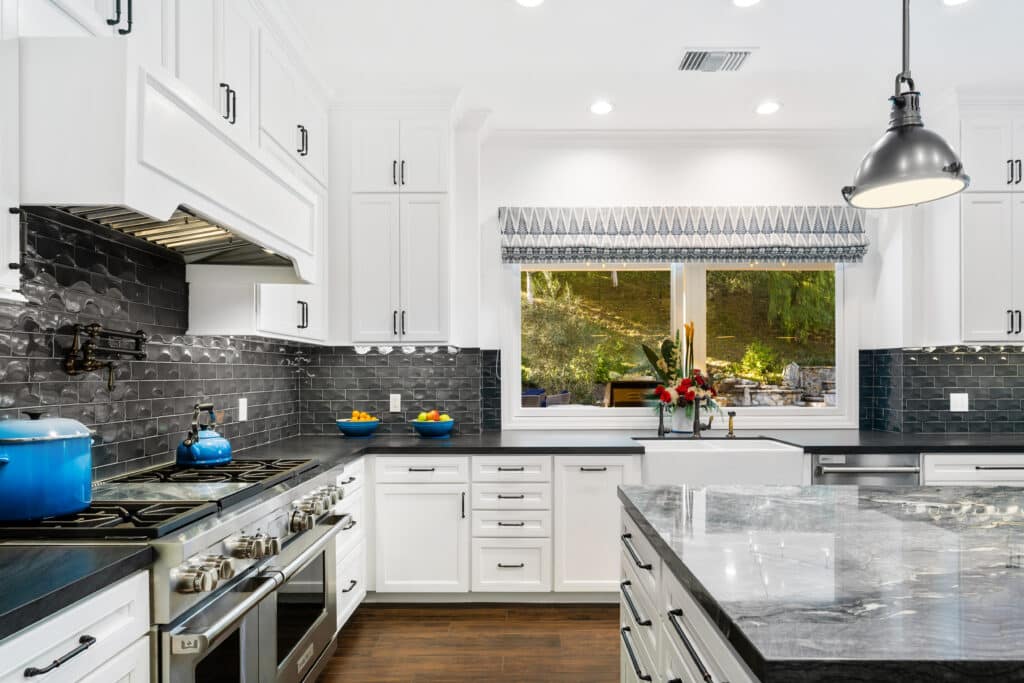
During a recent emergency call in Reseda, a customer experienced a major dishwasher drain leak that destroyed adjacent particleboard cabinets and underlying subflooring. Rather than spending thousands of US Dollars simply replacing worn out 1970s-era cabinets in kind, we coordinated with the owner’s insurance adjuster to isolate structural drying funds. We then seamlessly transitioned the project into a comprehensive kitchen remodel, installing solid plywood custom cabinetry, quartz countertops, and waterproof core flooring over thoroughly sanitized and reinforced subflooring.
Modernizing home layouts during restoration work also allows homeowners to incorporate resilient materials that resist future water intrusion. Replacing traditional gypsum drywall in splash zones with cementitious backer board or waterproof foam substrates minimizes future microbial vulnerability. Furthermore, upgrading aging shower pans with hot-moped asphalt or continuous bonded waterproof membranes protects subfloors against chronic pinhole leakage for decades to come.
Frequently Asked Questions
Frequently Asked Questions
How quickly does mold begin growing after structural water intrusion in San Fernando Valley homes?
Microbial growth typically begins within 24 to 48 hours following organic material exposure to elevated indoor moisture levels. In warm environments like the San Fernando Valley, high ambient temperatures accelerate spore germination on wet drywall paper, wood framing, and carpet backing. Immediate water extraction and air drying are critical to preventing structural contamination.
Can homeowners handle mold remediation independently if the visible patch is small?
Homeowners should only attempt DIY cleanup if fungal growth spans less than ten square feet on non-porous surfaces. Small isolated spots on hard ceramic or metal can be wiped clean using appropriate disinfectants. However, if mold penetrates porous drywall, subflooring, or HVAC ductwork, professional containment and HEPA filtration are required to avoid spreading airborne spores.
How do insurance providers evaluate water damage and mold claims in Reseda?
Insurance carriers cover sudden and accidental pipe bursts but routinely reject claims resulting from neglected long-term leaks or deferred maintenance. Adjusters inspect physical evidence, such as wood rot severity and pipe corrosion, to determine if damage occurred over an extended period. Detailed moisture log documentation from a certified restorer significantly strengthens claim approval odds.
Why is bleach ineffective for treating mold on drywall and structural framing?
Bleach fails to eliminate deep mold roots because its water content saturates porous wood while chlorine evaporates harmlessly on the surface. Fungal hyphae rooted inside drywall paper or pine framing feed on the remaining moisture, causing the colony to regrow rapidly. Effective treatment requires removing contaminated porous materials or applying specialized EPA-registered antimicrobials.
What qualifications should homeowners verify before hiring a restoration contractor in Sherman Oaks or Reseda?
Property owners must verify active California contractor licensing, IICRC certification, comprehensive general liability coverage, and specific pollution liability insurance. A qualified contractor must provide a written scope of work detailing negative air containment, psychrometric drying logs, and clearance protocols. Avoid uninsured operators who promise quick surface fixes without structural moisture monitoring.